For founders and engineers
Types of software engineers: who does what, and what each is paid
Eighteen kinds of engineer, from frontend and backend to forward deployed engineers and the AI labs’ Member of Technical Staff, with what each one builds, what each is best for, and what US wage filings show each is paid
Software engineers split into a few broad kinds. Frontend, backend and full stack engineers build the product people use, and mobile engineers build it for phones. Data, DevOps, site reliability, cloud and security engineers build and run the systems underneath, and embedded engineers write the software inside hardware. AI brought newer titles, from machine learning, AI and research engineers to forward deployed engineers who build inside a customer’s systems, and revived an old one at the labs, Member of Technical Staff. On US visa wage filings for the year to June 2026, median base salaries ran from $112,923 for DevOps engineers to $309,256 for Member of Technical Staff at the AI labs.
Software engineer salary chart by type
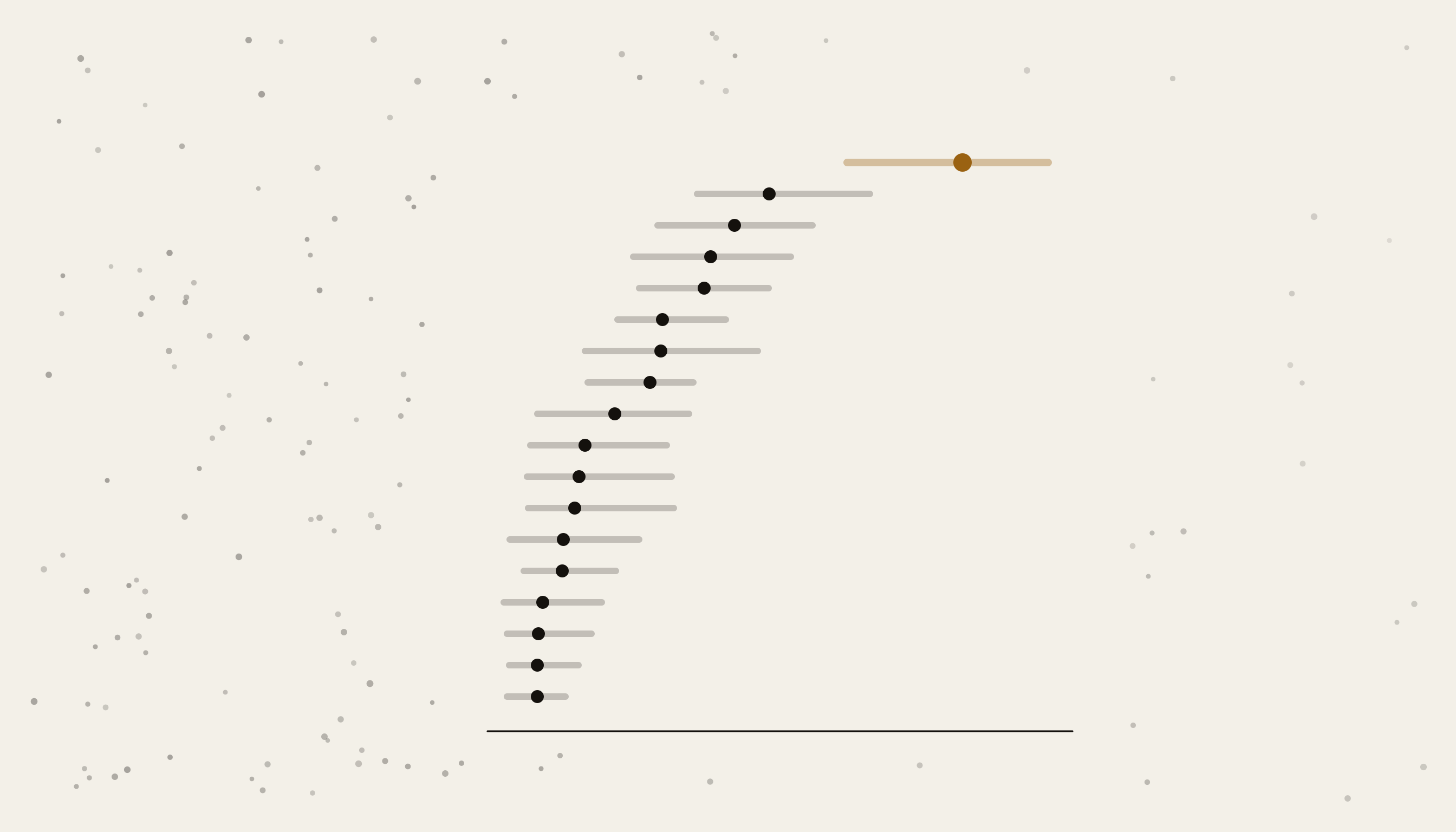
Median base salary for each kind of engineer on certified US visa wage filings decided from July 2025 to June 2026. The dot is the median filing and the bar spans the middle half. Each name links to its section below.
- Member of Technical Staff, AI labs$309,256, middle half $256,053 to $348,796, 418 filings
- Member of Technical Staff, elsewhere$220,000, middle half $186,682 to $266,461, 808 filings
- Research engineer$204,000, middle half $168,382 to $240,000, 391 filings
- Machine learning engineer$193,000, middle half $157,290 to $230,000, 1,416 filings
- Founding engineer$190,000, middle half $160,000 to $219,628, 271 filings
- Forward deployed engineer$170,818, middle half $150,000 to $200,000, 229 filings
- Backend engineer$170,000, middle half $135,004 to $214,738, 327 filings
- Security engineer$165,000, middle half $136,322 to $184,900, 603 filings
- Site reliability engineer$148,670, middle half $113,000 to $183,113, 481 filings
- AI engineer$134,971, middle half $109,806 to $172,802, 534 filings
- Frontend engineer$132,250, middle half $108,132 to $175,050, 520 filings
- Software engineer$130,330, middle half $108,773 to $175,944, 16,108 filings
- Embedded software engineer$125,000, middle half $100,172 to $160,000, 315 filings
- Mobile engineer$124,600, middle half $106,808 to $149,365, 261 filings
- Data engineer$115,450, middle half $97,377 to $142,800, 4,708 filings
- Cloud engineer$113,548, middle half $99,000 to $137,947, 406 filings
- Full stack engineer$112,962, middle half $100,000 to $131,997, 974 filings
- DevOps engineer$112,923, middle half $99,000 to $126,095, 1,177 filings
Software engineer leaves out Google and Meta, which file most levels of engineer under that one title. Amazon filed 30% of the frontend filings and 42% of the security engineer filings, TikTok and ByteDance companies 34% of the backend filings, Google and Meta 35% of the research engineer filings, and Palantir 21% of the forward deployed engineer filings.
Quick picks: what are you building?
- A product before it has customers. A founding engineer.
- An AI feature on a model someone else trained. An AI engineer.
- Models you train yourself. A machine learning engineer, and a research engineer if the work is new research.
- Software that has to work inside each customer’s systems. A forward deployed engineer.
- A product that has to stay up as it grows. A site reliability engineer or a DevOps engineer.
- Clean data in one place. A data engineer.
- An app people carry around. A mobile engineer.
Engineers who build the product
Frontend engineer
Builds what people see and use in the browser: pages, components, forms and how fast it all loads. The work is JavaScript or TypeScript, usually React, and sits close to design. Amazon filed 30% of these filings.
Best for web products, design systems, and anything where the interface is the product.
Backend engineer
Builds the servers, APIs and databases behind the interface: how data is stored and moved, and how the system holds up under load. It had the highest median of the longer-established kinds, and TikTok and ByteDance companies filed 34% of the filings.
Best for APIs, data models, payments, and anything that has to be correct every time.
Full stack engineer
Works across the interface, the server and the database, often in one language end to end, so one person can ship a whole feature. Early teams lean on them for that range.
Best for first versions, internal tools, and small teams that need range more than depth.
Mobile engineer
Builds apps for iPhone and Android, in Swift, Kotlin or a shared framework such as React Native. Phones bring their own limits: app store review, offline use, battery and slow networks.
Best for consumer apps and anything people use away from a desk.
Engineers who run the systems underneath
Data engineer
Builds the pipelines that move data from where it’s created into warehouses and tools people can query, and keeps it complete and on time. After the general software engineer title, it was the most common kind in the filings.
Best for analytics, reporting, and the data that machine learning is trained on.
DevOps engineer
Builds and runs the path from code to production: build and release pipelines, deploys, and infrastructure written as code. It had the lowest median of the kinds here.
Best for shipping often without breaking things.
Site reliability engineer
Keeps production running: monitoring, on-call, incident response, and the engineering work that removes the causes of outages. Google created the role.
Best for products where downtime costs customers money.
Cloud engineer
Designs and runs a company’s infrastructure on AWS, Google Cloud or Azure, including its networks, permissions and cost.
Best for moving to the cloud and keeping the bill under control.
Security engineer
Finds the ways a system can be attacked, in the code, the infrastructure and the company’s own tools, and builds the defenses that stop it. Amazon filed 42% of these filings, and Google and Meta another 11%.
Best for products that hold money, health records or anything else an attacker wants.
Embedded software engineer
Writes the software that runs inside hardware, from firmware on a chip to the control systems in cars, drones and factory machines, usually in C or C++ under tight limits on memory and power.
Best for robotics, devices, defense and anything with a circuit board.
The titles AI brought
Machine learning engineer
Trains, fine-tunes and serves models, with more statistics and infrastructure in the job than most engineering. Machine learning engineer salary breaks the pay down by state and employer.
Best for recommendations, ranking, vision, and any model you train yourself.
AI engineer
Builds products on models someone else trained, usually large language models: choosing the model, giving it context through retrieval and tools, and building the evaluations that show whether a change made it better. What is an AI engineer? covers the role, and AI engineer salary the pay by city.
Best for AI features, agents, and making a model reliable enough to ship.
Research engineer
Works beside researchers on new models and training methods, usually at an AI lab, turning experiments into code that runs at scale. Google and Meta filed 35% of these filings. Research engineer salary has the detail.
Best for new model work and training infrastructure.
Forward deployed engineer
A software engineer embedded with a customer, building real product against that customer’s systems and data. Palantir made the role famous and AI companies brought it back, and Palantir filed 21% of these filings. What is a forward deployed engineer? covers the job.
Best for enterprise products where the deployment takes longer than the demo.
Member of Technical Staff
A flat title for engineers and researchers, used so that level stays out of the job title. At the AI labs it covers nearly everyone technical, and filings at six labs had a median of $309,256 across 418. Everywhere else the title had a median of $220,000 across 808 filings. What does Member of Technical Staff mean? explains how to read it.
Best for AI labs and research-heavy companies that hire everyone technical under one title.
Two titles that cut across the rest
Founding engineer
The first engineers at a startup, hired before product-market fit to build the first version of everything and set the technical direction. Ownership decides the title more than the employee number, and a founding engineer can come from any kind above. Founding engineer vs. early engineer covers the difference.
Best for a company still finding its product.
Software engineer
The general title, and by far the most common: many companies file every kind above under it. The median here leaves out Google and Meta, which file most levels of engineer under this one title.
Best for most roles, so read the job description to learn which kind a company means.
What else moves the pay
Level. Within the same employer, senior software engineer filings carry a median salary 19% above software engineer filings, and the senior median is higher at 86 of the 91 employers that file at least five of each. Staff software engineer filings carry a median 17% above senior, higher at 39 of 41. Staff engineer vs. senior engineer covers what changes with each step.
The employer. A few large filers can carry a whole row: Amazon in frontend and security engineering, TikTok and ByteDance companies in backend, Google and Meta in research engineering, and Palantir in forward deployed work. The AI labs also pay more under the Member of Technical Staff title than the companies that used it before them.
Filings at the minimum. Between a fifth and three in ten of the DevOps, full stack, data, frontend and mobile filings named exactly the prevailing wage, the lowest salary the visa rules allow for that job and place. Among staff software engineer filings it was 2%, and at the AI labs none. Those filings pull the medians of the longer-established kinds down.
How we counted
Each figure comes from the Labor Condition Applications employers file with the US Department of Labor for a worker on an H-1B, H-1B1 or E-3 visa. We count certified, full-time filings with a yearly salary, decided from July 2025 to June 2026, and use the middle of the range where a range is filed. These are the same filings and rules as the Zelcast Pay Index, and the newer titles are its own rows. A longer-established kind matches when its words are the whole job title as filed, with software, engineer or developer around them, an entry-level numeral such as II allowed, and no level word such as senior, staff or lead. These are base salaries only, so they leave out equity and bonuses, and they cover workers on these visas, not every engineer.
Common questions
- What are the main types of software engineers?
- Frontend, backend and full stack engineers build the product, and mobile engineers build it for phones. Data, DevOps, site reliability, cloud, security and embedded engineers build and run the systems underneath. Newer titles include machine learning, AI, research and forward deployed engineers, and the founding engineer a startup hires first.
- Which type of software engineer makes the most?
- On US visa wage filings for the year to June 2026, Member of Technical Staff at the AI labs had the highest median base salary, $309,256, followed by the same title elsewhere at $220,000 and research engineers at $204,000. Among the longer-established kinds, backend engineers were highest at $170,000.
- What is the difference between frontend, backend and full stack engineers?
- Frontend engineers build what people see and use in the browser. Backend engineers build the servers, APIs and databases behind it. Full stack engineers work across both.
- Which software engineer should a startup hire first?
- Before product-market fit, a founding engineer who can build from zero and set the technical direction. Once the product works and has to grow, the balance shifts toward engineers with depth in one kind, such as backend or site reliability.