For founders
How long does it take to hire an engineer?
Five to seven weeks is the number most teams plan around. Where those weeks go, which of them you control, and why time to hire is the wrong thing to be measuring.
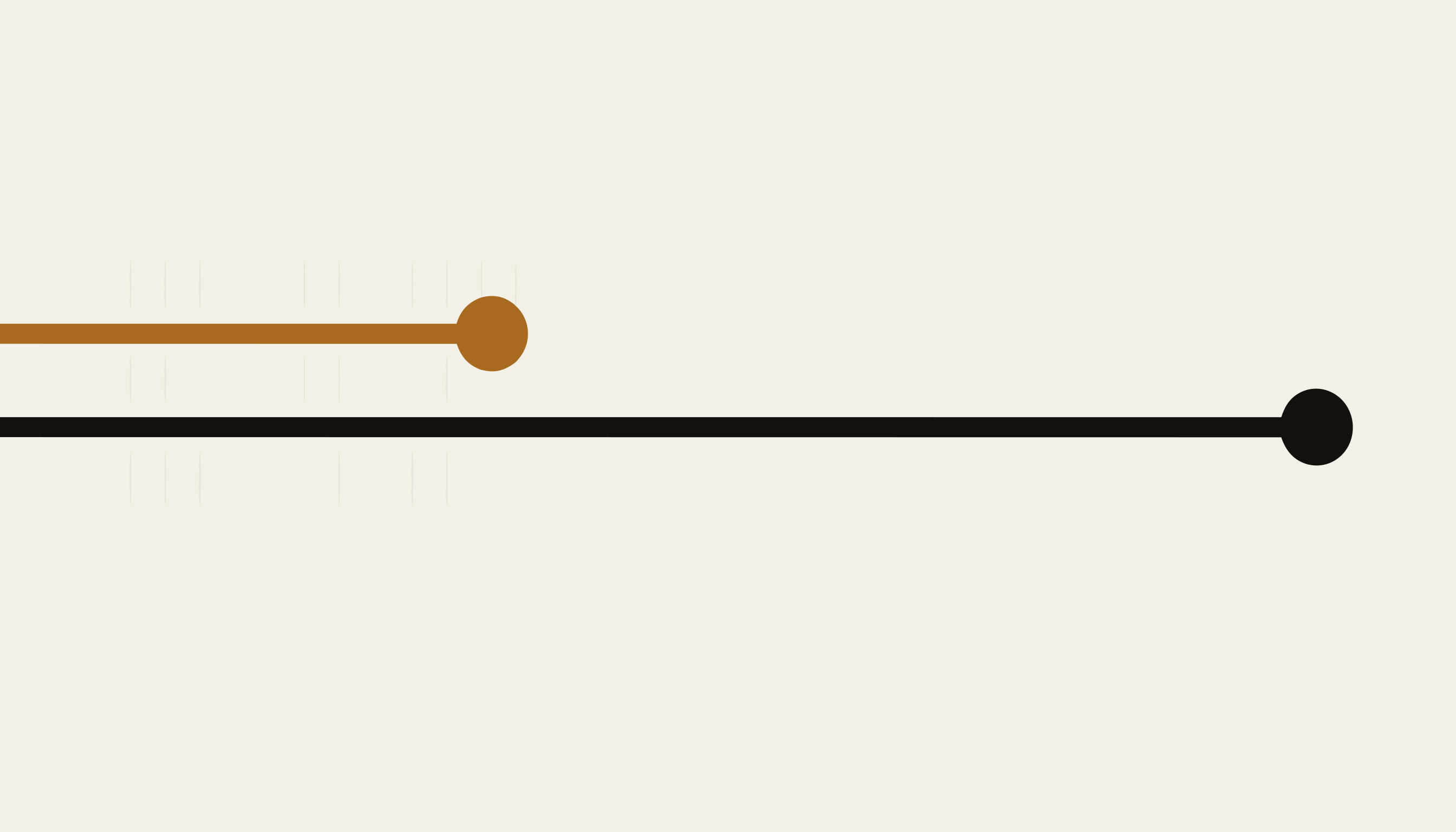
Filling a senior engineering role takes about five to seven weeks on average, measured from opening the search to a signed offer, and another two to twelve weeks on top if the person has notice to work. Most of that time goes into finding people who are any good, and then into the gaps between steps, where you wait for replies, for calendars, and for a decision from someone who’s traveling.
Where the weeks actually go
Writing the role takes longer than founders expect, because the first draft describes a job the company doesn’t have yet. A week disappears here, often more, and it disappears again later if the draft was wrong.
Sourcing is the long pole. If you’re starting from an empty list, you’re finding names, reading their work, and writing to strangers who are employed and content. Most working developers are employed and not actively looking, which the Stack Overflow developer survey finds year after year, so reply rates on cold outreach are low enough that the arithmetic needs volume, and volume takes weeks. We wrote about why those messages go unanswered separately.
Screening and the loop would be quick if each step didn’t wait on a calendar. Four interviewers, one candidate with a full time job, one week per round if you are organized, and the loop alone runs two to three weeks.
The offer stage adds days that nobody plans for: references, a compensation conversation, a counteroffer from their current employer, a weekend to think.
The part you don’t control
Notice periods aren’t negotiable and they aren’t your problem to solve. Two weeks is normal in the US, a month or three is normal elsewhere, and none of it counts as time to hire while it looks exactly like a delay to the person waiting for the work to start.
For a roadmap, the date that counts is the start date. A search that closes in four weeks and starts in twelve has taken twelve weeks.
Why time to hire is the wrong clock
Time to hire measures how fast you filled a seat. It says nothing about whether you filled it with the right person, and it rewards the wrong behavior: lowering the bar in week six because the number is getting embarrassing.
The number to watch is time to the right person. That number is dominated by whether the people you want are reachable when you need them. If they are, the rest is scheduling, and if they aren’t, no amount of process discipline fixes it.
What actually compresses it
Knowing the people already. Every week saved comes out of sourcing, and sourcing only collapses when someone already knows who is good and can call them. That’s why introductions beat searches on time.
A short loop with a decision maker in it. Three conversations that end in a decision beat six that end in a debrief. If a founder is not in the loop at an early stage hire, the loop will take longer and decide less.
Deciding before you start. Agreeing what the role is, what you will pay, and who says yes removes most of the delay that shows up later as thinking time.
What fast looks like
When the people are already known, an introduction reaches an offer in days. Our own average from introduction to offer is seven days, and the fastest is one.
The industry average of five to seven weeks is mostly the time it takes to find a stranger.
Common questions
- What is the average time to hire a software engineer?
- About five to seven weeks from opening the search to a signed offer, plus the notice period before they start.
- Why does hiring engineers take so long?
- Sourcing, mostly. Finding senior engineers who are any good and getting them to reply takes weeks. The loop itself is a few days of conversation spread across calendars.
- How can I hire an engineer faster?
- Shorten the loop, put a decision maker in it, and decide the role and the number before you start. The rest of the time is sourcing, and that only collapses when someone already knows who is good.
- How fast can Zelcast start?
- As soon as we get off the call.